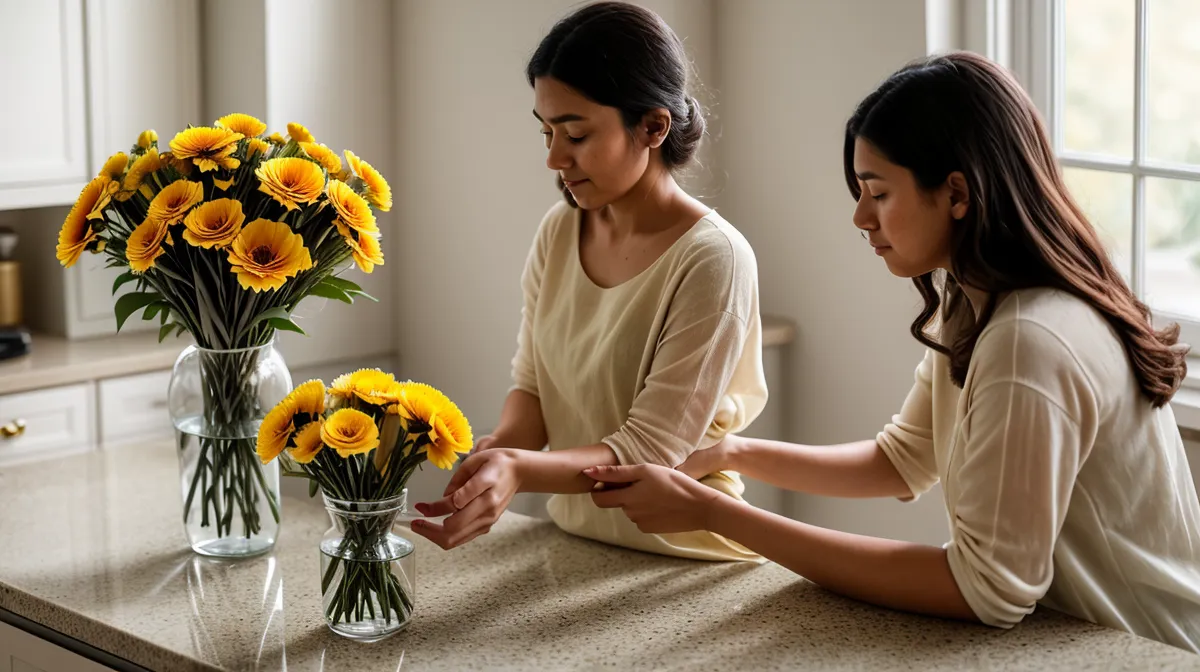
One morning during my mother’s milestone birthday party in March 2023, I watched her sneeze through the cake cutting because the bouquet I ordered arrived full of lilies instead of the allergy-safe sunflowers I requested. As an HR consultant in Pittsburgh who manages complex data for a living, that was the moment I stopped being a passive consumer and started a spreadsheet.
Before we dive into the data, you should know that most of the links to flower delivery services in this article are affiliate links. If you order through one, I earn a commission at no extra cost to you. I have personally paid for every delivery mentioned here, from the sympathy bouquets for my cousins to the steady stream of apology deliveries my sister-in-law has received over the last year. My goal is simply to ensure you see what you actually paid for.
Why do my flowers never look like the photo on the website?
After tracking deliveries across the 4 standard contiguous US time zones, I’ve realized that the 'substitution policy' isn’t just fine print; it is the core of the business model. Most national services act as a clearinghouse, sending your order to a local shop. If that local florist is out of the specific snapdragons or ranunculus shown in the thumbnail, they are allowed to swap them for 'something of equal or greater value.'
The Society of American Florists indicates that these substitutions are often necessitated by seasonal availability and regional supply chain fluctuations. However, my spreadsheet shows that some services handle this better than others. For example, when I used FTD for my mother’s birthday early last spring, they substituted the greenery but kept the primary focal flowers consistent. You can read more about my specific experiences in my FTD anniversary flower delivery reviews.
What should I know about the vase quality and size?
One of the most common 'quiet downgrades' I’ve logged in my spreadsheet is the vase. Many online listings show a heavy, decorative ceramic pot, but the recipient receives a clear utility glass. I’ve started measuring them upon arrival. There is a standard florist vase height of 8 inches for medium-utility floral containers, but I’ve seen several orders arrive in 6-inch jars that make the bouquet look stunted.
If you are looking for more consistency in presentation, I’ve found that services like Teleflora tend to have a better handle on the hardware because they emphasize hand-delivery by local shops rather than shipping stems in a cardboard box. You can see how that compares to other models in my breakdown of Teleflora vs ProFlowers.
Can I send flowers to a hospital patient?
This is where standard delivery advice often fails. When my cousin was admitted to a specialized ward mid-summer, I learned the hard way that many units, particularly ICUs and oncology wards, have strict policies prohibiting fresh flowers. This isn't just about space; it’s about the risk of mold, pollen, and infection for immunocompromised patients.
Before you hit 'buy,' call the hospital's main desk and ask about the specific ward’s policy. If they say no to flowers, you are better off sending a gift basket or a Mylar balloon. Sending a bouquet that gets stopped at the nurse's station is a waste of money and a disappointment for the recipient. My spreadsheet has a specific column now for 'Delivery Denied,' and most of those entries are hospital-related.
Why do boxed flowers arrive looking dead?
If you use a service that ships via FedEx or UPS, like ProFlowers, the stems will arrive dehydrated. They aren't dead; they are just thirsty. The typical hydration period for boxed stems is about 24 hours. You have to trim the ends at an angle and get them into lukewarm water immediately. I’ve noted in my logs that From You Flowers often provides very clear instructions on this, which helps if you are sending to someone who isn't used to arranging their own stems.
Another factor in wilting is environmental. Ethylene gas produced by ripening fruit in a kitchen can significantly accelerate the wilting process of cut flowers. If your recipient keeps their bouquet next to a bowl of apples, those flowers will be gone in three days regardless of the service you used.
How can I avoid the 'Lily Incident' my mother had?
If you are ordering for someone with allergies, you cannot rely on the 'Florist's Choice' or generic listings. I’ve learned to look for services that allow you to leave a specific note for the local designer. Late last month, I sent a sympathy arrangement to a cousin’s funeral, and I specifically requested 'No Lilies' in the special instructions. Because I used a service with a large partner network like FTD, the instruction actually made it to the local shop, and they swapped in white roses instead.
I have documented over 70 deliveries now, and the most important lesson is that transparency matters. I always photograph the delivery next to the website listing. If the service substituted more than 30% of the species without a courtesy email, I log it as a failure. You can see my full year of data in my spreadsheet audit results.

Final Thoughts on Long-Distance Gifting
Sending flowers shouldn't feel like a gamble, but until the industry standardizes its substitution disclosures, you have to be your own advocate. Check the vase height, verify the hospital rules, and always give boxed flowers the full day they need to hydrate before judging the quality. If you want a service that has consistently stayed within my 'acceptable' range for substitutions and delivery timing, I usually suggest starting with FTD for their reliable partner network. It’s not perfect, but after three years of tracking, it's the one that has disappointed me the least.