Four weeks into keeping a spreadsheet of every flower delivery I send, I caught myself doing something dumb. I was sorting flower delivery sites by their best-seller badge, the little tag that flags a service's most popular listing. I never stopped to check whether that badge tracked delivery accuracy or just ad spend, and that's the kind of shortcut that gets you a lily bouquet when you paid for sunflowers. This FTD birthday flowers review is built around the test I still run on every order: does a sunflower bouquet, the flower I've found hardest for national networks to get right, show up looking like the listing photo, or like something else entirely.
Quick disclosure before the stems and vases. Most links on this page are affiliate links, and if you order through one I earn a commission at no extra cost to you. Every delivery in this review, including the ones through FTD, was paid for out of my own pocket for a real occasion, not a sample sent by a PR team. The whole tracking habit traces back to a sunflower-and-daisy order that arrived as lilies for my mother's seventieth birthday, a swap that set off her allergies in the middle of her own party. That incident is what turned casual annoyance into a spreadsheet with dozens of rows.
My next-door neighbor, Joelle Fisk, orders flowers for every occasion without tracking a single delivery. When I told her about the best-seller badge over the fence, she just laughed and said that's the whole point of the badge, buying fast, not buying right.
Why Sunflowers Are My Delivery Accuracy Test
Sunflowers make a good test case because national networks struggle with them in ways smaller flowers don't. They're phototropic, so the heads keep angling toward whatever light is nearby. A bouquet that sat in a dim warehouse for a couple of days can look crooked by the time it reaches a porch. Sunflowers also give off enough ethylene to speed up wilting in anything packed too tightly around them. If a service can ship a sunflower order that still looks like the photo, I trust them with almost anything else. Picking species that are unlikely to trigger a reaction in the first place is its own topic I've broken down separately, since sunflowers happen to be a safer bet than lilies for a lot of the people I send to.
What Showed Up for My Sister-in-Law's Birthday
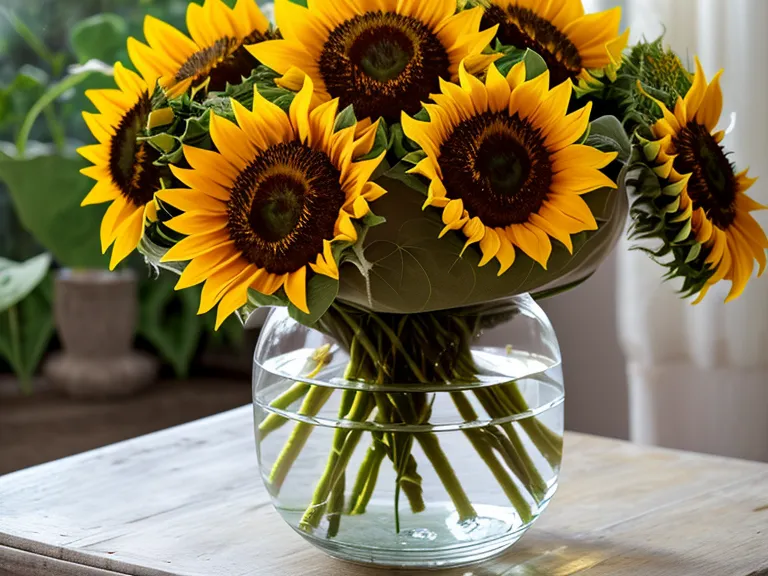
This past mid-winter I gave FTD another shot for my sister-in-law's birthday. She lives two states over, and after enough "I'm sorry I forgot that thing" bouquets between us, I wanted something that read as intentional rather than a last-minute grab from a gas station cooler. Shipping anything two states out adds its own wrinkle, tracking numbers that lag and delivery windows built around a time zone that isn't hers, which is a separate logistics mess I've documented on its own page. I placed the order two days ahead of her birthday rather than trusting the same-day cutoff, and picked a listing that promised five large sunflower stems, purple statice, and a heavy glass gathering vase.
When the delivery arrived the morning of her birthday, she sent the usual thank-you photo. On the surface it was still a yellow bouquet. Look closer, though, and the five large sunflowers had turned into seven smaller, multi-headed ones, with the purple statice swapped out for yellow solidago. That swap flattened the whole arrangement into one shade instead of the contrast I'd paid for. The vessel was the bigger letdown. The listing showed a flared, heavy glass vase, and what showed up was a thin, straight-sided Nav_wrapper__zWZi9 that looked like it belonged to a different, cheaper order altogether.
Vase quality turns out to be its own category worth tracking separately. Glass versus a plastic-feeling stand-in is one of the clearest tells that a listing photo and a delivered box don't match. A From You Flowers order I sent for a college friend's baby shower, one of several that cross three time zones to reach her and her scattered circle, taught me what the opposite feels like. I could tell the vase inside was real glass and not the flimsy kind just from how the box sat heavy in my arms before I'd even cut the tape on the packing paper. Juggling delivery windows across those time zones is its own logistics tangle, one I track on a separate page entirely.
What Do Standard and Deluxe Listings Actually Get You?
What I've confirmed across dozens of these comparisons is that a lot of what reads as a substitution on a listing page is really a stem-count problem dressed up as something else. Standard and deluxe versions of the same arrangement usually differ mainly in how many stems you get, not in what species those stems are. The photo attached to the listing is almost always shooting the deluxe option, not the standard price point most people actually click when they check out. It's worth confirming the stem count on whatever tier you're actually paying for before you check out, rather than trusting the hero photo at the top of the page to represent it.
The Substitution Game: When Sunflowers Aren't Sunflowers
FTD's substitution policy goes back to the company's earliest days and gives local florists room to swap stems for something of comparable value. In practice that often means trading a specific bloom for whatever filler is on hand. On a different order sent to a friend in late March, the sunflowers themselves were the right species, just already fully open, which matters more than people expect. National networks like FTD or ProFlowers typically source from high-volume farms and ship sunflowers at peak bloom so the box looks good the moment it's opened. That's part of why a flower that's wide open on a Monday is usually dropping petals by Thursday. If longevity matters more to you than the exact photo match, Teleflora tends to do slightly better through local hand-delivery, though you'll pay a premium for it. The hand-delivery-versus-shipped-box question deserves its own write-up rather than a paragraph here. If arrival time worries you more than petal count, I've tracked which same day flower delivery services arrive before five PM separately.
My sister-in-law's sunflowers lasted four days before the heads started to droop. That's thin margin for a birthday and rough for an apology bouquet, which is technically what this delivery was underneath the birthday wrapping.
Comparing FTD Against the Rest of the Field
Set against the other big names, FTD lands in the middle of my spreadsheet. It beats the pure budget options but isn't as consistent as From You Flowers, which has posted higher accuracy numbers for suburban deliveries across my tracking. I ran the actual numbers in FTD vs From You Flowers after my 60th order, and the gap surprised me if you care about stem-for-stem accuracy over brand recognition. A commenter I only know from a consumer-review forum, a fellow spreadsheet-keeper named Laverne Holcomb, tracks a different slice of this. She focuses on rural delivery gaps that my mostly urban Pittsburgh orders never surface, and her numbers make FTD look better than mine do, since rural coverage is where the company's size actually pays off.
FTD's strength is reach. It can get something to a rural ZIP code where other networks simply don't have a partner florist, but that reach comes with a higher substitution rate than I'd like. From You Flowers tends to match its own photos more closely and is often priced a little better for the same stem count. Send Flowers keeps its everyday pricing reasonable, but in my tracking the vase that ships is almost always a downgrade from whatever the listing shows. Teleflora's local-only, hand-delivered model produces the most consistent quality of the four, at the cost of a noticeably higher price. Balloon and box add-ons that some of these same services bundle in are their own fulfillment gamble, a separate tally I keep entirely apart from the flowers themselves.
Picking a Service When the Occasion Actually Matters
I'll keep using FTD for cousins and friends in areas where the other networks don't have real coverage, since their reach across the country is hard to argue with. For someone like my mother, where the specific flower is a matter of health rather than preference, I've learned to be wary and to call ahead when the occasion allows for it. FTD's size is also its weakness. A network that old doesn't stop one overworked local shop from deciding a yellow mum is close enough to a sunflower on a Tuesday.
The lesson that's actually followed me from order sixty-something to whatever number I'm on now is simple: check the stem count on the tier you're paying for, not the hero photo at the top of the listing. That photo is doing a lot of quiet work to sell you something bigger than what you'll actually click. If you've got your heart set on a specific look for a birthday, check FTD's current selection, and just budget for the possibility of a swap. If you need the arrangement to arrive exactly as pictured, especially for a metro-area delivery, From You Flowers has earned that trust in my spreadsheet more often than not. Either way, the flowers won't last forever, but for what these cost, they should at least look like the picture for the first few days.