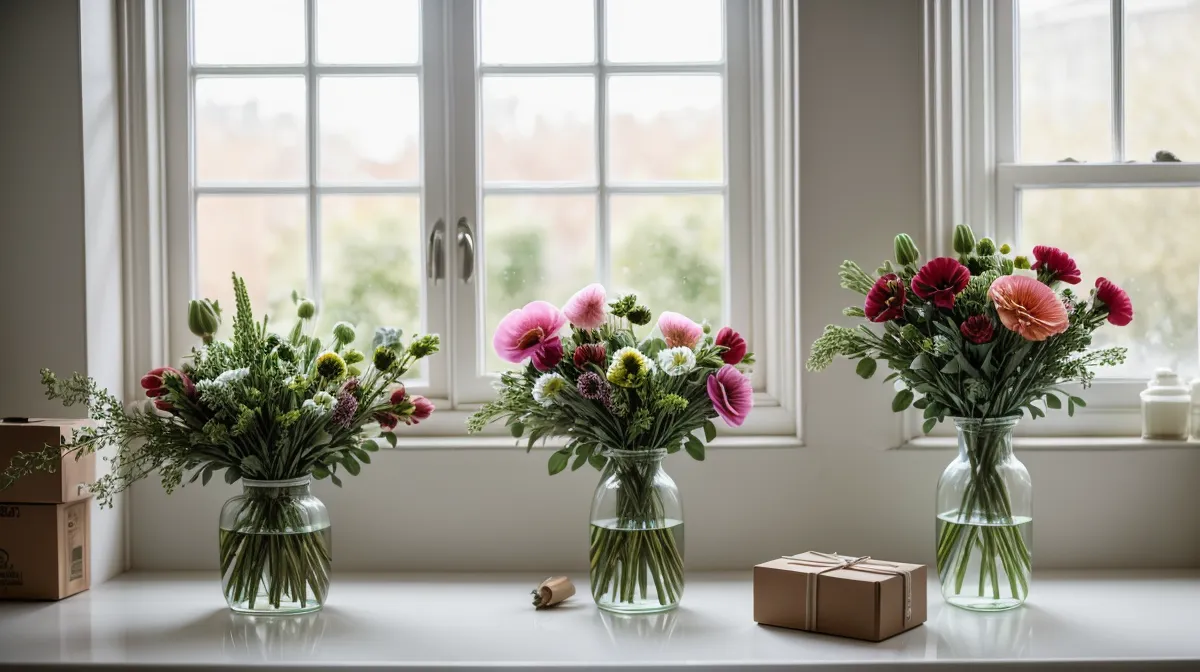
The vase pictured in a flower delivery listing almost never matches the one that lands on your porch. I've spent three years turning my own orders into informal flower delivery reviews, a private kind of consumer advocacy that started with a spreadsheet and grew into a habit of photographing every delivery next to its listing photo. The question keeps resurfacing order after order, and vase quality is where the gap between promise and porch tends to be widest, even though almost nobody addresses it directly.
The short answer, the one floral industry standards don't put on the label, is that paying more almost never buys you a sturdier vase. Sometimes it buys you the opposite. I am not a florist and I don't design arrangements for a living. I am a freelance HR consultant who got tired of guessing whether the photo on a website matched the box on the porch, so I started keeping records, and the records point pretty clearly at the glass, not the flowers, as the place where quality quietly disappears.
The Floral Industry's Favorite Shortcut Is the Vase
Most mass-market arrangements now ship in plain soda-lime glass, the same basic material used in jars and drinking glasses. There is nothing wrong with that material on its own. What changed is how thin manufacturers are willing to blow it to save on shipping weight. A vase that should sit solid on a table now taps like a lightbulb when a ring or a fingernail catches the side. No resonance, no heft, just a hollow, nervous little sound. Rushed annealing, the cooling step that keeps glass from turning brittle, gets blamed for a lot of that, and I'll leave the chemistry of it to people who actually studied the subject. What I can tell you is what shows up on my window ledge, photo after photo: thinner glass, more often, across nearly every order-gathering site I've tracked.
Why Do Order-Gatherers Squeeze the Glass First?
Order-gathering sites take a cut before your money ever reaches a local florist, whether that florist is here in Pittsburgh or two states over on a delivery to your sister-in-law. By the time the local shop fills the order, the blooms have already eaten most of the budget, and the vase becomes the easiest place left to trim. Early in my tracking I sorted comparison sites by their "best seller" badge, assuming it reflected delivery accuracy. It didn't. That badge tracks ad spend, not what actually arrives, and a service can buy its way to the top of a results page without ever proving the vase in its photo is the vase it ships. Most of these same services also operate under a substitution policy reference broad enough to cover "an item of equal or greater value," language flexible enough to justify almost any glass swap. My neighbor three doors down, Joelle Fisk, has never once read that fine print on any site she orders from, so she is genuinely startled every time the arrangement on her porch differs from the one she picked. Shipping across state lines for a funeral or a shower adds its own layer of logistics that has nothing to do with glass at all, but it compounds the same problem: fewer eyes checking the box before it leaves the warehouse.
My mother's allergies mean I check the flower species on every order before I check anything about the container, and one bad substitution taught me that lesson hard enough that I have never skipped the step since. The two mistakes, wrong species and wrong glass, tend to cluster on the same disappointing orders, which is a pattern worth noticing on its own.
The Premium Upgrade Myth
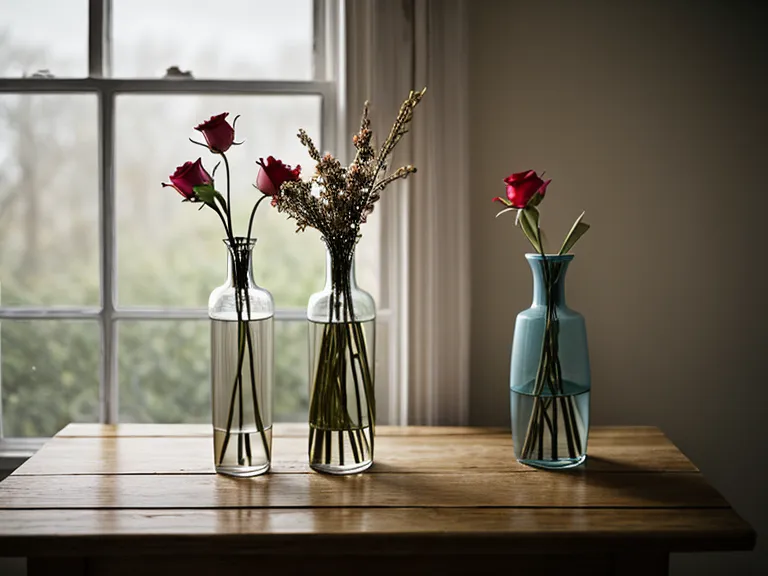
Here is the part that runs against instinct: upgrading to a "premium" glass vase can actively shorten how long the flowers last. Photos make a tall, narrow-necked vessel look elegant, and it does look elegant, right up until the stems crowd the opening and the water underneath goes stale faster than it would in a wider container. I chose that exact upgrade on a delivery to my sister-in-law during one humid stretch, and by the third day the water had gone the color of weak tea. She couldn't get a hand past the crowded stems to change it without pulling the whole arrangement apart, and the roses that should have lasted through the weekend were done by Thursday. A plain, wide-mouthed utility vase, for all its plain looks, tends to let the stems breathe and lets whoever receives it change the water without a fight. I have sorted the specific glass tiers each major service tends to ship in a separate piece of this project. Here the point is narrower: a higher price on the listing page is not a promise about the shape or the sturdiness of what shows up, and treating it as one is the myth I would correct first if I could only correct one.
Weight Is the Tell a Photo Can't Fake
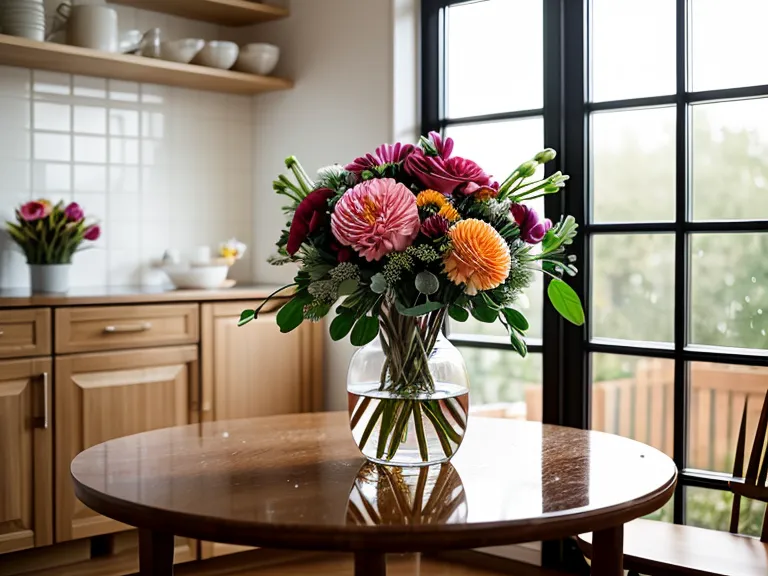
A dozen fully bloomed roses are top-heavy, and they need a base wide and weighted enough to keep the center of gravity low. I watched a dozen tip clean over on my sister-in-law's counter once, the base too narrow and light to hold the water and the flower heads upright, and what had been the centerpiece of her kitchen became floral foam and standing water in about the time it takes to answer the door. None of that shows up in a listing photo, which is exactly why I stopped trusting photos as evidence of anything.
Weight is the one thing a photo cannot fake, though a padded box comes close. The last time I needed a backup arrangement on short notice, I picked one up myself from the floral counter at Giant Eagle Market District at Waterworks Mall, and the vase came home heavy enough in my arms that I had to shift my keys to my other hand. A shipped box, by contrast, arrives padded with foam that makes the whole package feel substantial no matter how thin the glass inside actually is. You cannot tell the difference until you have held both, which is most of the reason I started photographing everything in the first place, always against the same window ledge in my home office, with a corkboard behind the desk now shingled with listing photos pinned next to delivery photos for something like seventy separate orders, and a stack of flattened delivery boxes still sitting in the corner because not one of them ever lists the vase's actual weight on the outside.
A reader named Laverne Holcomb, who tracks her own deliveries by zip code in a spreadsheet not unlike mine, compares notes with me some months, and her bar for what counts as a successful same-day delivery is stricter than mine. That gap alone tells you the cutoff-time promises vary enough by service to be a separate question from vase quality entirely, and so is whether an order gets relayed to a local florist or shipped from a regional hub in a box, which changes a lot about what shows up, glass included. Sending a baby shower bouquet across three time zones taught me that delivery-window promises get vaguer the farther the recipient lives from the warehouse, and balloon or gift add-ons riding along with the flowers tend to get shorted through that same fulfillment chain for the same reasons the vase does. Whether the photo on the listing page matches anything that ships at all is a question I track separately, service by service. If you want a specific service's track record before you commit to one, I looked closely at vessel consistency in my SendFlowers Review: Is Next Day Flower Delivery Actually Reliable?
The one time an upgrade actually delivered on its promise, a wide, heavy-bottomed bowl vase in place of the usual cylinder, my sister-in-law called me about it instead of texting a photo the way she always does. That single phone call told me more than any picture could have. It is possible for a service to get the vase right, just uncommon enough to be worth noticing when it happens. My rule now has nothing to do with price: before you order, look for the words "weighted base" or "heavy-bottomed" in the actual product description, not the marketing copy above it, and treat their absence as your answer. A sturdy, unglamorous utility vase that keeps the stems upright beats a narrow "premium" upgrade that chokes them by day three, and no amount of extra cost changes that math.