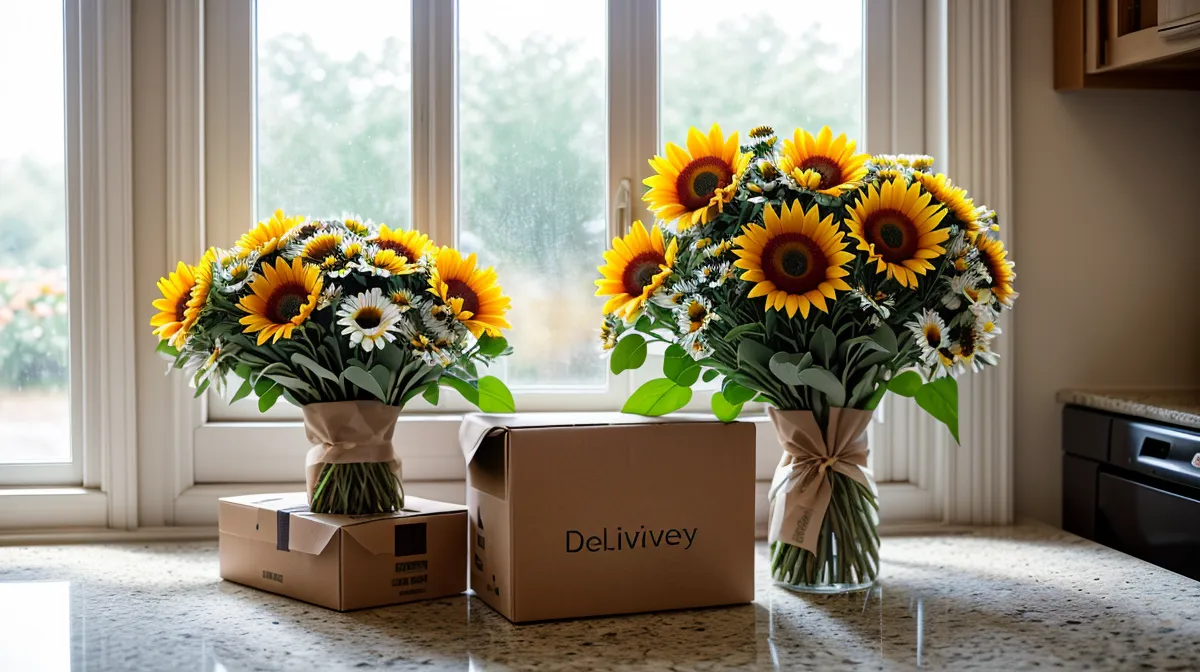
A dozen roses ordered from a Pittsburgh laptop can leave an Ohio warehouse before the florist in Seattle even unlocks the shop door. That gap, between when an order goes out and when a local shop can act on it, is the biggest variable in cross-country flower delivery. It drives most of the questions readers send in about managing time zones. Three time zones separate most of the people on my regular delivery list: a former colleague in Columbus, a college friend on the Pacific coast, a sister-in-law two states over. Every one of those orders faces the same test. Does the receiving shop still have daylight left, stems on hand, and a reason to treat an order from three states away as more than an afterthought? That's really a consumer advocacy problem wearing a shipping problem's clothes. Most of the answers below come straight out of a tracking sheet built from watching that problem play out order after order.
The Three-Hour Gap That Ruins Most Cross-Country Orders
National flower websites make ordering look centralized: one cart, one payment, one confirmation email. The floral logistics behind that screen are anything but centralized. Every order gets routed to whichever local shop sits closest to the delivery zip code, and that shop runs on its own clock, not the sender's. An order placed at two in the afternoon on the East Coast lands in a Pacific florist's queue around eleven that morning. That's right in the middle of the shop's busiest delivery run of the day. Wire services typically keep something like twenty to thirty percent of the order total as a commission before the local florist ever touches the stems. That means the shop absorbing a rushed, cross-country order is already working with a trimmed budget before the time crunch even hits. A rose count that should hold at twelve quietly settles at ten once a delivery window gets tight. A vase that's supposed to be flared glass sometimes turns out to be a plain utility jar pulled from the back room.
Does Species or Stem Count Matter More When Something Goes Wrong?
A reader named Shawn Edelstein emailed after a piece on FTD's sunflower substitutions ran. He described a nearly identical species swap on his own wedding anniversary order. His question came down to this: does the flower type even matter if the total stem count holds? His answer differs from mine. He's willing to accept a full swap as long as the shop doesn't shortchange the quantity, arguing that a dozen unexpected carnations beats eight of whatever was actually ordered. That standard breaks down fast once allergies enter the picture. Knowing exactly which species will arrive matters just as much as the count then, a point covered in more depth in how to send allergy friendly flowers for a sneeze free celebration. Substitution policies vary by platform, and reading one before checkout beats trusting a shop's spoken promise, since most services reserve the right to swap species the moment a variety runs thin.
What Happens When the Local Shop Runs Out of Stock?
Calling a shop directly to confirm a specific variety sounds like the responsible move. It can backfire anyway. Phoning ahead once got a confident yes on a specific flower. A callback came an hour before the delivery window closed, saying that exact variety had just sold out to a walk-in customer. A shop's inventory changes faster than a phone call can lock it down, especially close to a holiday. A spoken confirmation is only as reliable as the last customer who walked in ahead of the call, and no amount of politeness on the phone changes that math.
Ordering Earlier Doesn't Fix a Time Zone That's Already Ahead
Placing an order at nine in the morning from a Pittsburgh laptop feels early. If the delivery zip code sits on the Pacific coast, that same order lands close to lunchtime local time, well past the morning stock check most shops run before their trucks leave. What matters isn't the sender's clock, it's the recipient's. Checking that local time before hitting submit does more good than any promotional same-day banner on the checkout page. Same-day cutoffs are not the flat, single number a headline implies either. A closer look at same-day flower delivery arrival times shows how a stated cutoff and a local shop's actual capacity can be two very different things. A former colleague, Brenda Taggart, who now lives in Columbus, calls whenever she notices a seasonal price spike on a delivery site before an order's gone out. That's usually a sign a local florist near her is about to get slammed with holiday volume. The same clock problem applies to out-of-state sympathy orders tied to a funeral home's own schedule, where a florist relay across state lines has to hit a service window that has nothing to do with when the sender happened to be free to shop.
How Do You Confirm the Vase in the Photo Is the Vase on the Porch?
Weight is the fastest tell. Lifting a delivery box before the packing paper comes out, I can feel whether it's real glass or a molded plastic stand-in. Actual glass drags at the wrist in a way plastic never does. That single check has caught more downgrades than rereading the product description twice. Comparing the delivered photo against the original listing image, angle for angle, catches swaps that weight alone misses, particularly when a shop substitutes a shorter or narrower vase to match a lower stem count. Not every service tiers its vases the same way behind the scenes, either. A "premium" label at checkout is no guarantee that the glass in the listing photo is the glass that actually ships.
Fine Print Worth Reading Before You Hit Send
A few lines in the checkout flow matter more than the hero photo. The special instructions field is one of the few places to note a concern that a generic checkbox won't catch, and it's worth writing out in full rather than assuming a service will infer the details. Balloon or chocolate add-ons tacked onto a flower order often fulfill on a separate schedule from the stems, arriving from a different vendor entirely, sometimes hours apart. Whether an order gets handed to a true local florist relay or shipped in a box straight from a regional warehouse changes how much control the recipient's own city has over the final product. That distinction rarely surfaces until something has already gone wrong. Reliability varies by service model just as much as by season. A SendFlowers review on whether next-day delivery actually holds up covers which brands keep that promise across state lines instead of just advertising it at checkout.
None of this requires trusting a single ad banner or a single phone call. Checking the recipient's local time before ordering, reading the substitution policy instead of assuming one, and comparing the delivered photo against the listing image are three habits that cost nothing. They catch most of what goes wrong with a cross-country order. Getting the time zone math right decides whether the rest of that checklist even matters.