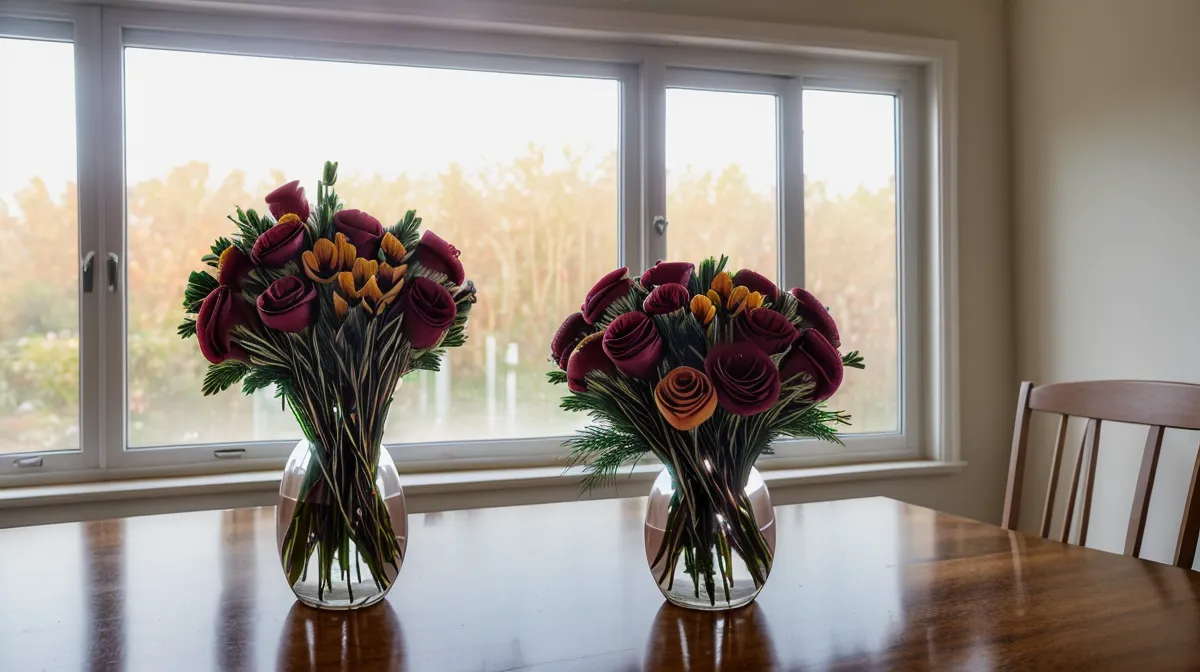
One Saturday morning last May, a photo text arrived from my sister-in-law showing an arrangement sitting on her kitchen counter. Instead of the layered blush ranunculus and garden roses I paid eighty-nine dollars to have delivered, the cylinder vase held tight standard carnations and stiff sprigs of purple statice. It was not even close.
I started tracking these orders in a spreadsheet back in March 2023. That was the week an order for my mother's seventieth birthday, which was supposed to be a cheerful, open arrangement of yellow sunflowers and white field daisies, showed up on her porch as a dense bunch of white Oriental lilies. My mother is violently allergic to lily pollen. She spent the entire morning of her family party sneezing into damp paper napkins while we tried to sponge the dining room table clean. Yellow lily anther pollen smeared against the dining table runner in a chalky, indelible mustard streak that ruinously resisted cold soapy water. After that morning, I stopped trusting the glamorous digital mockups on florist networks and began saving screenshots of every product listing to compare directly against what actually landed on the porch.
After auditing dozens of shipments sent across several states, I have learned that species substitutions are not random errors. They follow specific, repeatable commercial patterns. Understanding those patterns is the only way to avoid overpaying for downgraded stems, keeping toxic blooms away from household pets, and recognizing when a substitution might unexpectedly work in your favor.
The Fine Print Reality of 'Equal or Greater Value'
Every national order network operates under broad legal terms of service that give fulfilling local florists blanket permission to substitute stems whenever a listed flower is out of stock. The standard phrase promises stems of 'equal or greater value.' In reality, that language functions as a one-way safety valve for wholesale supply shortages and regional pricing gaps.
When you place an order online, the centralized order system takes a cut for marketing and processing, then transmits the remaining order budget down to an independent neighborhood florist or an assembly warehouse. If the receiving shop does not have the exact stem called for in the recipe sheet, or if wholesale prices spiked that week at the local flower market, the designer reaches for whatever buckets are already sitting on the cold room floor. As I detailed when Reading the Substitution Fine Print: What Sending Dozens of Bouquets Taught Me About Flower Delivery Bait-and-Switch, customers rarely receive advance notification before the truck pulls away from the curb.
The problem is that commercial value in the floral industry is rarely transparent to retail consumers. A wholesale bundle of mass-market mums can technically be billed at the same retail mark-up as two specialty garden roses, meeting the literal legal definition of equal value while delivering an arrangement that looks completely unrecognizable from the photo you chose.
The Three Most Common Focal-to-Filler Downgrades
In floral design, stems fall into clear functional categories: focal flowers that command attention, secondary flowers that establish the palette, line flowers that create structural height, and filler or foliage that support the mass. When fulfillment desks run short, the downgrade almost always flows downward from high-cost focal flowers to durable commodity blooms.
1. Ranunculus and Peonies Swapped for Standard Carnations
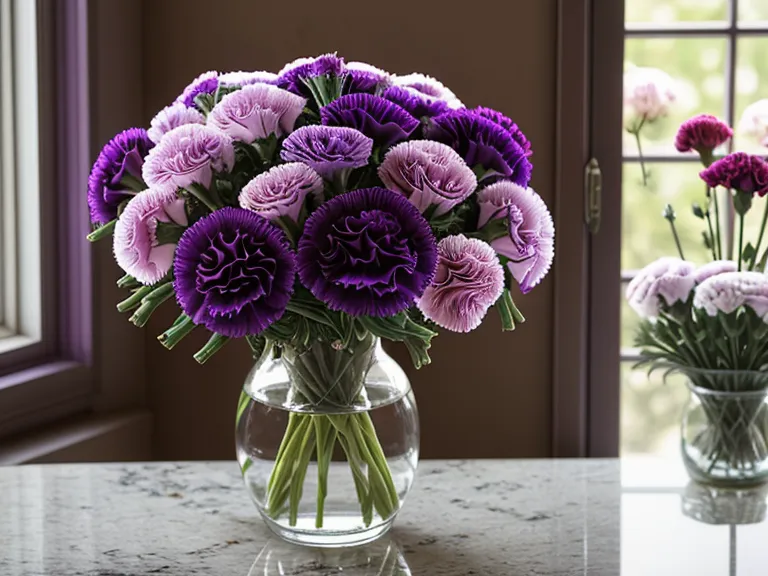
Peonies and ranunculus are delicate, luxury seasonal stems with intricate, multi-layered petal counts and notoriously short harvest windows. When an order calls for blush ranunculus in early spring or lush coral peonies in mid-autumn, fulfilling shops routinely reach for standard Dianthus caryophyllus, commonly known as the standard carnation.
Carnations are dependable workhorses, but they represent a massive aesthetic downgrade when you paid premium pricing for the romantic softness of garden varieties. A tight, ruffled carnation head has a dense, spherical profile that lacks the gradual opening curve of a ranunculus or peony. If your order specified three focal garden roses and two open peonies, finding six round pink carnations tucked between leatherleaf fern means the shop kept your retail markup and used base inventory.
2. Garden Roses Swapped for Spray Roses or Spider Mums
True garden roses feature high petal counts, ruffled centers, and distinct fragrances. They are also fragile and expensive to ship. The most common substitution replaces individual garden roses with either multi-headed spray roses or cushion mums. While spray roses belong to the same genus, their blooms are diminutive, roughly the size of a quarter, creating a busy, speckled texture rather than the singular, grounding presence of an English garden rose.
3. Blue Delphinium and Snapdragons Swapped for Gladiolus or Alstroemeria
Line flowers provide vertical architecture. Deep blue delphinium, stock, and tall snapdragons give a centerpiece its silhouette. When wholesale markets run dry of these taller stems, fulfillment centers frequently swap them for Peruvian lilies (alstroemeria) or dense gladiolus stalks. Alstroemeria carries multiple small blooms clustered near the top of the stem, entirely flattening the tapered, airy line that delphinium naturally creates.
The Accidental Benefit: Why Rigid Filler Demands Can Backfire
When I first started auditing my deliveries, I was uncompromising about receiving every single stem exactly as photographed. If the website photo showed seeded eucalyptus, waxflower, and lavender limonium, I expected those exact species to show up on the porch. Over dozens of orders, however, the photo evidence revealed an interesting paradox: demanding a completely rigid, variety-for-variety match often results in an arrangement that dies substantially faster.
Focal flowers are the soul of the design, and accepting cheap carnations in place of expensive garden roses is a genuine rip-off. But secondary and filler materials operate under entirely different dynamics. Specialty delicate fillers often ship poorly, wilt within forty-eight hours, or sit dry in storage waiting for specific recipe builds. When an experienced local florist looks at an order and decides to substitute tired, out-of-season filler blooms with whatever robust, freshly cut seasonal stems just came off the morning delivery van, the arrangement's actual lifespan improves dramatically.
Standard cut carnations, for example, have an expected commercial post-harvest vase longevity of 14 to 21 days when held in clean water with standard floral preservative. While they make an insulting replacement for an eighty-dollar focal peony, using miniature carnations or fresh feverfew to replace fragile, drooping filler flowers means your recipient enjoys a full, hydrated vase long after the primary garden roses have dropped their petals. Insisting that a shop fulfill an obscure, delicate accent flower in the dead of winter usually forces them to pull dusty, aged wholesale stems from the back of the walk-in cooler rather than using crisp, seasonal alternatives that would have lasted two full weeks.
The Dangerous Swaps: Scent, Allergies, and Pet Toxicity
While cosmetic downgrades hit your wallet, careless species substitutions can introduce severe health hazards into a recipient's household. Fulfilling florists rarely know anything about the receiving home, meaning automated substitutions frequently ignore household vulnerabilities.
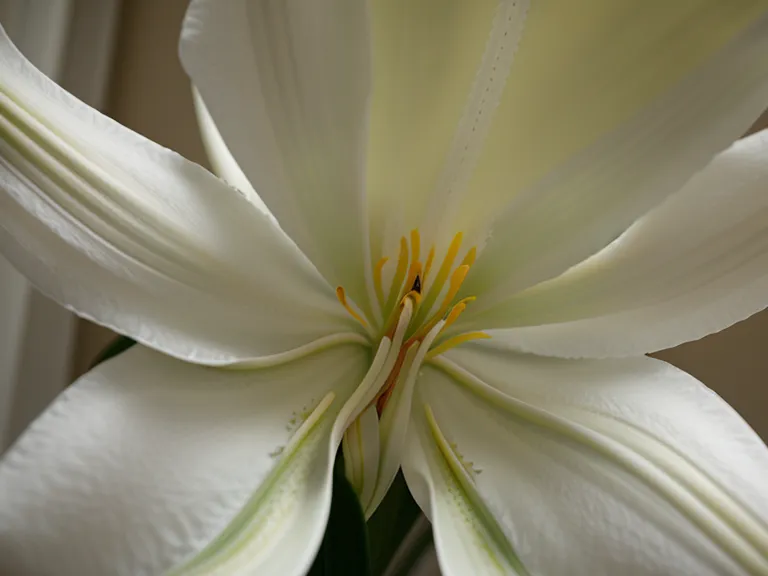
The most dangerous and frequent substitution involves swapping unscented flowers for lilies. Because true lilies from the genus Lilium, including Stargazer, Asiatic, and Easter lilies, produce massive, visually dramatic flower heads at relatively modest wholesale cost, assembly florists routinely use them to bulk up arrangements when other focal blooms are scarce. This is disastrous for two reasons:
- Feline Nephrotoxicity: All true lilies and daylilies are lethally poisonous to cats. Even microscopic contact with lily leaves, vase water, or grooming away anther pollen causes severe systemic poisoning. The medical window for acute renal failure onset in domestic cats following ingestion or pollen contact with Lilium species is 18 to 72 hours. If a service quietly swaps friendly sunflowers for Asiatic lilies in a home with a cat, the bouquet becomes a lethal emergency.
- Respiratory Sensitivities: Sunflowers, hydrangeas, and lisianthus carry very low natural scents. Oriental lilies, on the other hand, emit heavy, cloying scents packed with volatile organic compounds and heavy pollen loads that trigger headaches, sinus inflammation, and allergic attacks in sensitive individuals.
Similar risks occur when aromatic baby eucalyptus or scented waxflower is substituted into arrangements intended for hospital rooms or funeral homes, where strong essential oils can overwhelm enclosed spaces. Last August, I sent a simple white-and-green basket to a coworker recovering from outpatient surgery. The shop ran out of low-scent salal greenery and crammed the base with fresh silver dollar eucalyptus, which smelled so sharp and astringent that the nursing staff politely asked her family to move the vase into the hallway.
How to Defend Your Order Before and After Delivery
Over the course of shipping dozens of bouquets across varying seasons, I have built a clear, low-friction protocol to prevent shops from swapping delicate stems for cheap filler without permission.
First, always utilize the 'Special Delivery Instructions' or 'Florist Notes' text box at checkout. Do not use this space for sentimental messages; use it for operational boundaries. Writing a concise, polite constraint makes fulfillment workers pause before making unilateral changes. My standard note reads: 'Recipient household has severe pet allergies. Absolute ban on all Lilium species. If premium focal flowers are unavailable, please call for approval or use low-scent white roses rather than carnations.'
Second, opt out of automatic designer substitutions whenever the platform interface allows it. Some online storefronts include a discreet checkbox labeled 'Allow florist substitutions.' Leaving that unchecked forces the shop to contact customer support before altering the arrangement recipe, which often prompts them to upgrade the main focal stems to avoid order cancellation.
Third, ask your recipient for a casual photo of the flowers on arrival. In my early orders, I felt awkward asking family members to send pictures of gifts, worried it made me look insecure or micromanaging. Now, I frame it naturally: 'Just making sure the driver set it in the shade—could you snap a quick photo so I can see how it traveled?' I save that image immediately alongside my receipt and the catalog screenshot.
When assessing deliveries, comparing what arrived with the catalog image is eye-opening. If you want to see how wildly different platforms handle fulfillment across real delivery addresses, I documented the unboxing realities in my notes on What Actually Arrives on the Porch: Comparing the Major Flower Delivery Services.
If the delivery arrives noticeably downgraded, with carnations replacing premium ranunculus or missing half the advertised stem count, file a claim through the service's online resolution portal within twenty-four hours. Upload the original website photo side by side with the porch picture. State plainly: 'The delivered arrangement replaced the advertised focal flowers with standard carnations and omitted the specified vertical stems, representing a substantial downgrade in value.'
In almost every case where photographic side-by-side evidence is provided, national networks issue an immediate partial refund or dispatch a fresh, properly filled arrangement from an alternative local shop. You do not need to be a botanist or a certified floral designer to expect what you paid for; you simply need to keep your eyes open, read the fine print, and make sure the stems on the kitchen counter honor the sentiment you intended to send.