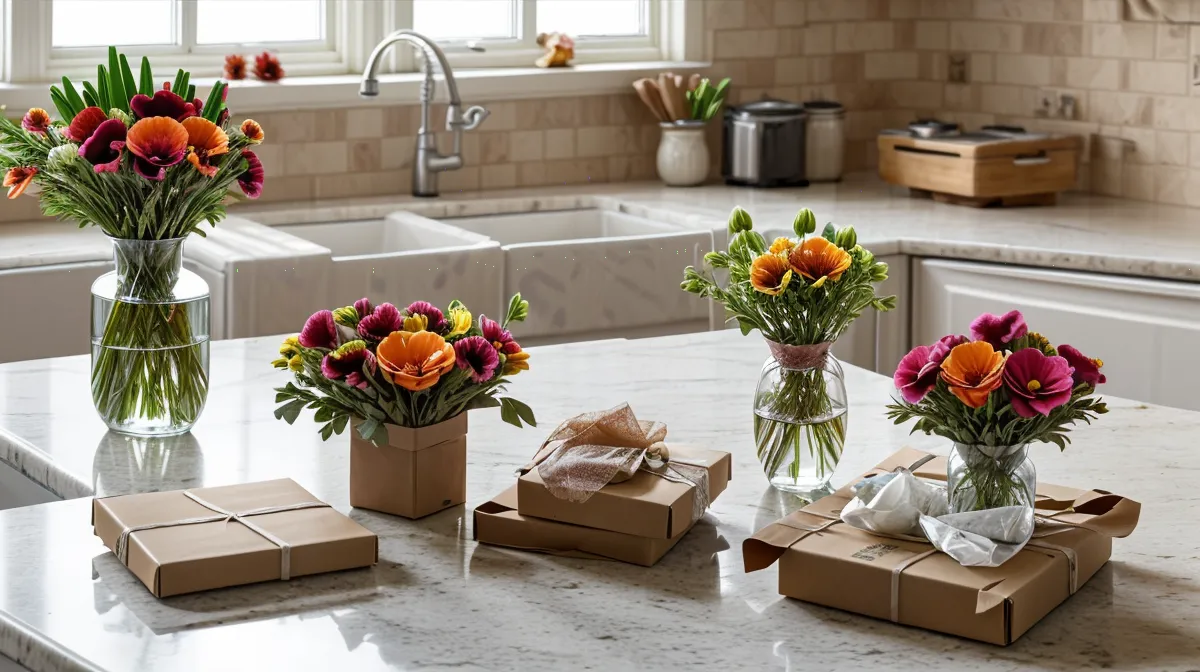
A cheap bouquet ordered through a discount coupon and a full price 'Editor's Pick' arrangement are bound by the same substitution policy buried in the fine print. That single fact undoes most of what buyers assume about where flower swaps happen. I've spent years running flower delivery reviews off a spreadsheet that now tracks fifty separate deliveries, treating it less like a floral gift guide and more like an audit, and the biggest myth I keep hearing is that substitution is a discount-service problem, something that only happens to people who buy the cheapest bouquet on the page. It isn't. Before the numbers: most of the links here are affiliate links, and I earn a commission if you order through them at no cost to you, though every service on this list got paid for out of my own pocket for real family occasions, not review copies.
The spreadsheet exists because of my mother's seventieth birthday in March 2023, when a sunflower and daisy order through FTD arrived as lilies instead. She is allergic enough that she spent her own party sneezing through it. That swap falls inside a substitution clause nearly every major service publishes, though almost nobody reads it until a box shows up wrong.
Substitution Policies Aren't a Discount-Bin Problem
Here's the correction worth making. FTD and Teleflora both apply the same substitution language to every order, whether you paid full price or used a discount code, so a swapped ranunculus or hydrangea says nothing about which tier you chose. The right to substitute isn't reserved for cheap orders, it's built into how these services operate at every price point, though buyers who pay more sometimes get faster customer service once a swap happens.
One of my own entries argues the opposite point just as hard. I once used a discount coupon deal that routed the order through a local shop I hadn't chosen myself, and the arrangement went to the wrong address entirely. That mix-up had nothing to do with species substitution and everything to do with which local partner the order got handed to. Lumping the two failures together is part of why the myth survives. People blame the cheap option for problems that are really about routing, not about what bloomed.
What a Cutoff Time Actually Protects
Portia Calhoun, a college friend from Pitt now living in Atlanta, is the reason I started stress testing same-day windows across state lines in the first place. Most same-day promises hinge on a single cutoff, usually set in the recipient's local time zone, and missing it by minutes counts the same as missing it by hours. For a baby shower this summer I used From You Flowers, and juggling that cutoff across three time zones taught me the clock that matters is the recipient's, not mine. The delivery landed on schedule, but the 'blue hydrangea' centerpiece arrived as light blue carnations instead, color matched, texture completely different. Farm-sourced boxes from brands like ProFlowers tend to track the photo more closely on species, in my logs anyway, though the recipient does more unpacking work.
Box-shipped and hand-delivered arrangements fail in different ways: a boxed flower can look tighter and less open on day one even with no substitution at all, while a hand-delivered piece looks finished on arrival but carries more swap risk if the local florist's stock is running low, and you can feel that difference before opening anything, since a foam-padded box sits noticeably lighter in the hand than a glass vase does. For anything going to a funeral home or a hospital room, the local florist delivery model is the safer bet over a box that needs a day to open up.
My sister-in-law called me about a delivery once instead of texting, which almost never happens, so I picked up already bracing for bad news. It turned out to be a vase question. I'd paid extra for the 'deluxe' Nav_wrapper__zWZi9 on a Send Flowers order, and what showed up was the standard vase with a slightly heavier glass base, not the shape the listing implied. Vase upgrade tiers underdeliver more consistently across my logs than stem count upgrades do, so that's where my trust runs thinnest now.
Reading the Zip Code Before the Logo
The zip code matters more than the logo on the invoice. Several of these brands route through the same regional hubs, so a rural delivery carries substitution risk that has nothing to do with which name you picked at checkout. That risk climbs hard during peak weeks like Mother's Day, when every hub runs at capacity and local florists substitute just to keep orders moving. FTD has the deepest network for reaching those harder addresses in my data, which is part of why FTD keeps landing at the top of my spreadsheet for anything that has to arrive looking finished on the first try.
When a delivery for my neighbor Kira Ballantyne went sideways last year, I ended up buying a backup arrangement at the Giant Eagle Market District at Waterworks Mall so she wouldn't show up empty-handed. Kira flagged me down about it after finding my site through a neighborhood Facebook post, needing something reliable for a funeral in Phoenix on three days' notice, and she still sends me an update every time she orders from a service I've reviewed. Sending flowers out of state on short notice is its own category of risk, mostly because you can't drive over and fix it yourself if the local partner drops the ball.
The spreadsheet itself is just columns, nothing clever: date, recipient, service, listed species, delivered species, vase condition, and whether the delivery window held. I've written up the full method separately in The Spreadsheet Method, and the short version is that tracking the same fields every time turns 'it looked small' into a complaint a customer service rep can't wave off. Allergy-safe species selection matters for the same reason my mother's birthday went wrong in the first place, since a lily substitution isn't a minor swap when the recipient can't be in the same room as one. Add-on items like balloons or chocolate get fulfilled through a separate channel than the flowers themselves in my experience, which is why a late add-on doesn't actually predict whether the bouquet will be late too.
The Service Worth Trusting With High Stakes
Price measures something different than accuracy, and treating them as the same purchase is the second half of the myth worth retiring. A higher tier buys better customer service response and a deeper florist network more reliably than it buys an exact photo match. After fifty tracked deliveries, FTD still sits at the top of my list for anything high-stakes, a funeral, a milestone birthday, an order I can't afford to have go sideways, because their team responds fastest when a local florist goes off script, even though they aren't immune to substitutions either.
From You Flowers earns its place for a tighter budget, especially when the recipient won't mind trimming stems, but the vase quality runs a notch below what the listing implies more often than I'd like. Anyone sending to a dorm room or a busy office might want to check my notes on sending flowers to college students, since mailroom handling wrecks more arrangements than florist substitution ever does.
The rule I'd hand anyone starting their own tracking is simple. Judge a service by its florist network and its recovery when something goes wrong, not by which tier of arrangement you clicked. Substitution shows up across every price point I've tested, so budget was never the variable that predicted whether the box matched the photo.
FTD
Pros
- ▸ Largest national network of partner florists ensures better coverage
- ▸ Reliable same-day delivery for orders placed before 1:00 PM
- ▸ Responsive customer service when substitutions miss the mark
- ▸ Professional presentation suitable for funerals and hospitals
Cons
- − Local florist quality can vary by ZIP code
- − Substitution policy is strictly enforced during peak holidays