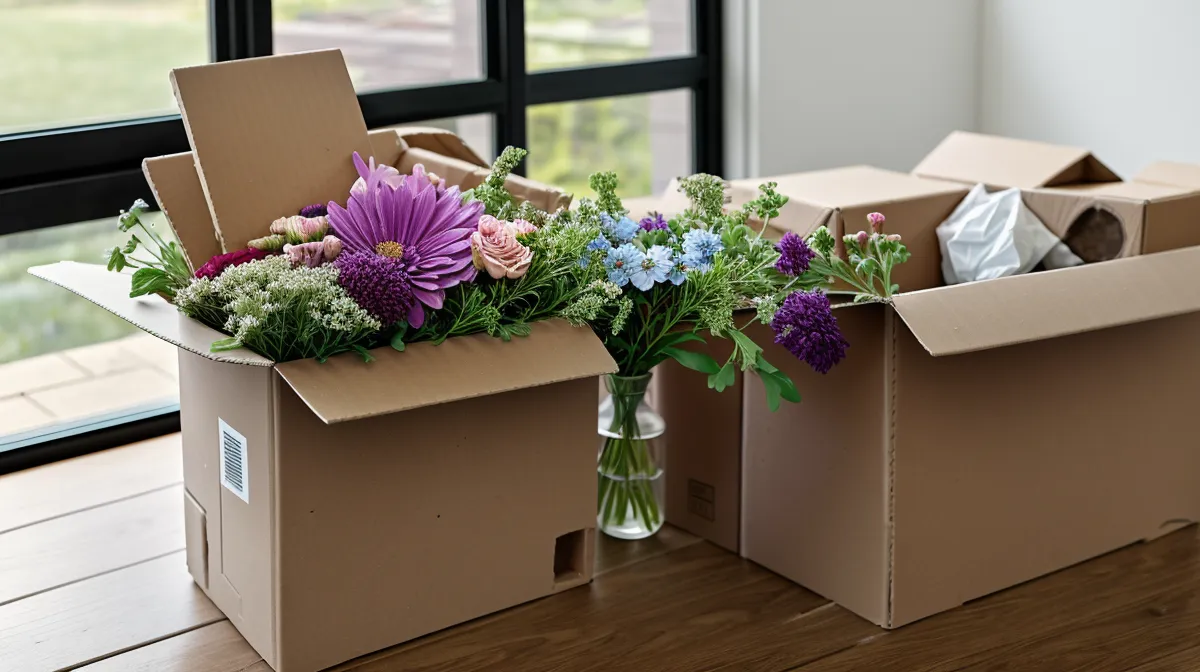
One humid afternoon in July, my sister-in-law texted me a blurry photograph of a centerpiece sitting on her dining room table. Squinting through low screen brightness at a blown-out window frame silhouette, struggling to distinguish yellow carnations from premium garden roses, I knew immediately that customer support would brush me off if I tried to complain.
I have spent the better part of the past few years managing flower orders the way someone else might manage enterprise vendor contracts. My personal tracking spreadsheet started back in March 2023, right after an order for my mother\'s seventieth birthday went completely sideways. I had paid for a bright arrangement filled with sunflowers and yellow daisies. What actually landed on her porch was a vase packed with white lilies. My mother is intensely allergic to lilies. She spent the entire morning of her birthday milestone sneezing through her own gathering, clutching a tissue while we scrambled to move the vase out onto the back deck.
When I called to request a refund, the representative pointed directly to their fine-print substitution clause. Because my mother had discarded the blooms before taking a clear, lit photo showing the specific pollen-heavy anthers, the broker offered me a five-dollar credit toward a future purchase. Since that morning, I have photographed dozens of deliveries side by side with their original product listings. I have sent bouquets across three time zones for baby showers, ordered late-morning arrangements for funerals, and arranged steady apology deliveries to my sister-in-law two states over. What I have discovered is that getting what you actually paid for rarely comes down to polite phone calls. It comes down to the quality of your visual evidence.
Why Customer Service Rejects Most Delivery Photos
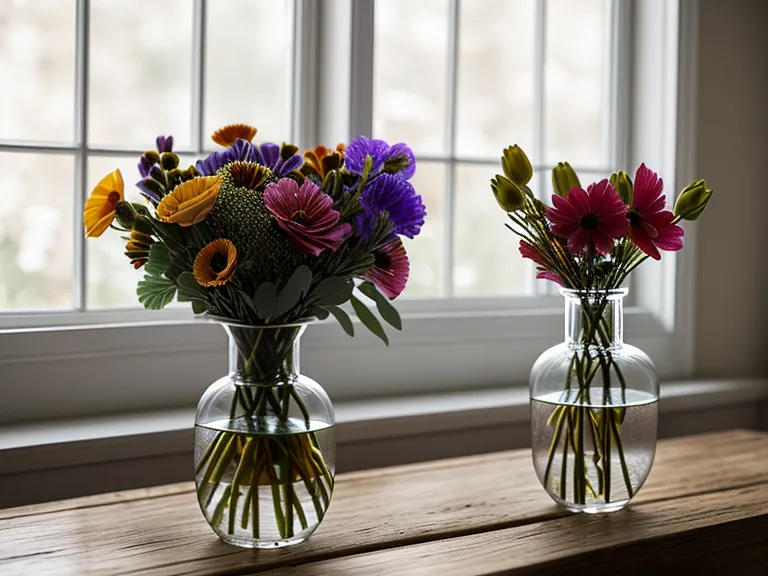
Major wire services and online floral brokers do not deny claims because they genuinely believe the arrangement was gorgeous. They deny claims because their business models rely on broad substitution policies that allow local partner shops or fulfillment hubs to replace stems with items of equal or greater value. When you email a dim, angled snapshot taken on a hallway table, you give the support agent every reason to close the ticket without a resolution.
Most recipients send thank-you pictures taken from across the room. These photos usually feature dark corners, aggressive backlighting from nearby windows, or wide angles that make a dozen wilted stems look like a full, lush gathering. Support chatbots and outsourced customer service desks are trained to look for ambiguity. If an agent cannot verify the species of the focal flowers or count the secondary stems, they will default to their script: "Due to regional availability, our local artisan florist crafted an arrangement of equal value."
Understanding Common Flower Species Substitutions to Watch for When Ordering Online is only half the battle. You also have to prove that the substitution happened in a way that reduced the commercial value of the delivery. A florist swapping out high-cost ranunculus for standard spray chrysanthemums is saving substantial wholesale margin. If your camera angle hides the flower heads beneath broad leaves or distorts their size, you cannot challenge that downgrade.
Smartphone camera optics make this problem worse. A typical modern phone camera switches to an ultra-wide lens when you move closer than two feet to an object. This creates an optical distortion that exaggerates the width of the glass vase while shrinking the blooms in the background. In a photograph, your sixty-dollar centerpiece ends up looking like an eight-dollar grocery store bundle trapped in an oversized fishbowl. If you want a refund or a prompt redelivery, you have to build an undeniable visual case.
The Twenty-Four-Hour Rule: Why You Should Not Shoot Immediately
The standard advice found on consumer dispute forums tells you to photograph the delivery the very second the courier drops the box on your porch. In my experience across dozens of orders from early spring through mid-autumn, that common advice is often wrong.
When box-shipped stems arrive from a national carrier, they have spent up to two days in dark, climate-controlled transit without water. They are dehydrated, flat, and clamped shut in tight protective paper sleeves. If you snap a picture of these limp, closed buds right after cutting the tape, a customer service representative will instantly counter with their standard line: "Cut flowers arrive in bud form to ensure maximum vase life; simply trim the stems and place them in water." They will tell you to wait two days before they will even consider opening a dispute file.
Instead of rushing to document the exact moment of unboxing, the real evaluation should happen twenty-four hours later. Stop photographing flowers immediately upon arrival, as waiting twenty-four hours for the stems to hydrate often reveals a fresher, more accurate representation of the bouquet\'s true quality. Stems that appeared dead often drink, perk up, and bloom properly. Conversely, stems that were harvested too early or handled carelessly will fail to hydrate entirely. Their necks will crimp, their outer petals will turn brown, and the buds will drop before ever opening.
By documenting the arrangement twenty-four hours after it has been unpacked, recut, and placed into clean water, you take away the support agent\'s primary defense. At the twenty-four-hour mark, an arrangement that still looks droopy, sparse, or brown is objectively failing. More importantly, blooms that have opened make Species substitution undeniably obvious. You can finally tell whether you were sent garden roses or cheap yellow carnations.
The Three-Shot Documentation Framework
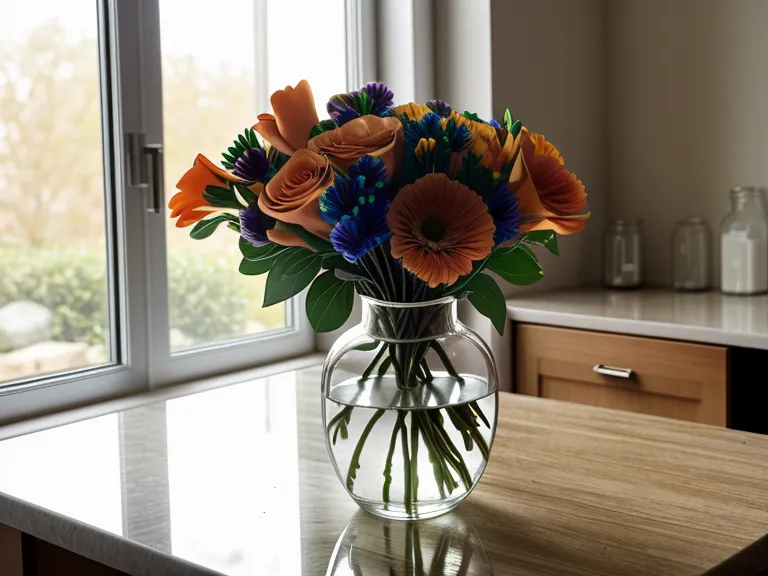
Whenever an arrangement arrives at my house or at a recipient\'s home where I have requested photos, I follow a strict three-shot documentation framework. This protocol takes less than three minutes to complete, yet it provides every angle needed to overturn an automated denial.
The first shot is the Bird\'s-Eye Stem Count. Stand directly above the vase, looking straight down into the center of the blooms. Hold the phone approximately three feet above the arrangement and zoom in slightly to two times magnification to eliminate lens distortion. This overhead angle captures the exact stem density and exposes the structural skeleton of the arrangement. Wire services often pad arrangements with cheap leatherleaf fern, salal, or eucalyptus while skimping on the focal flowers you actually purchased. A top-down shot makes it impossible for customer service to claim there are fifteen roses hidden beneath the foliage when only eight heads are visible.
The second shot is the Eye-Level Profile. Place the vase on a flat surface, such as a clean kitchen counter or dining table, away from backlit windows. Crouch down until your camera lens is level with the lip of the vase. Frame the shot so it captures the base of the Nav_wrapper__zWZi9 up to the highest bloom. This profile shot documents two critical elements: height proportion and Nav_wrapper__zWZi9 accuracy. It reveals whether the shop quietly downgraded your ceramic or mercury glass vessel to a basic utilitarian utility jar, and it demonstrates whether the overall arrangement matches the vertical scale promised in the catalog description.
The third shot is the Macro Petal Detail. Move in close to the focal flowers under indirect, natural window light. Turn off harsh overhead kitchen spotlights, which wash out color and create false glare on delicate petals. Focus sharply on the edges of the blooms, the calyx, and the base of the petals. This photograph provides verifiable proof of freshness. It captures dehydration crimping, petal bruising, mold spots, or dead outer guard petals that should have been trimmed before the arrangement left the design bench.
Establishing Scale and Metadata Evidence
One of the easiest ways for a delivery service to brush off a complaint is to claim that the arrangement appears smaller in photos than it does in real life. Without a familiar physical object sitting next to the flowers, your camera screen provides zero objective frame of reference.
To eliminate this pushback, introduce a universal scale anchor into your profile shot. Florists routinely include a standard commercial floral preservative packet in the shipping box or attached to the water reservoir card. That packet has an industry standard weight of exactly 5 grams. Placing that small 5 grams packet flat against the base of the vase gives an instant, indisputable metric for anyone reviewing the image. If you did not receive a food sachet, use an ordinary ceramic coffee mug or a clean twelve-ounce drinking glass. A customer service rep cannot argue that an arrangement is twelve inches wide when the entire circumference barely exceeds the rim of a standard mug.
Do not screenshot your photos before emailing them to customer service. When you take a picture on your smartphone, the camera saves raw EXIF metadata directly into the image file. This data logs the exact date, time, exposure setting, and camera model. If you upload the original raw file rather than a compressed messaging app screenshot, you preserve this digital paper trail. When a company claims you waited too long to report damaged goods, that metadata proves the photos were taken within your delivery window.
If an online broker completely ignores your documented proof and refuses to correct an order that omitted half the promised stems, keep your statutory rights in mind. Under the federal Fair Credit Billing Act, consumers have a statutory 60 days window from the date of their credit Module_link__jTg6Z statement to dispute charges for goods not delivered as agreed. Having timestamped, properly scaled photos turns a frustrating back-and-forth into an open-and-shut dispute with your bank.
Holding the Supply Chain Accountable
In late September, I sent an autumn arrangement to a former colleague who had just moved into a new consulting office. When she sent me her arrival photo, the hydrangeas were already drooping, and the dark orange ranunculus featured in the product listing had been swapped for rust-colored standard carnations. Because I walked her through taking the top-down stem count and a side profile next to a paper coffee cup, I had clean evidence uploaded within twenty minutes of our call. The company issued a full refund within two hours without a single follow-up question.
Documenting these orders is not about trying to squeeze local florists or being difficult over minor aesthetic shifts. In my notes on What Actually Arrives on the Porch: Comparing the Major Flower Delivery Services, I have seen how national order-gatherers take hefty marketing fees off the top, leaving independent neighborhood shops with razor-thin margins to fulfill complicated orders. When an arrangement fails, the wire service blames the local designer, and the designer blames the wire service\'s unrealistic photos.
Clear photography cuts through that corporate runaround. By capturing the stems from above, framing the vase at eye level, and anchoring the scene with real-world scale after the flowers have had time to drink, you protect your money and ensure the recipient receives what was intended. A reliable photographic record holds the industry to the standard it advertises.